• Location

    Namangan

    Fergana Valley, Uzbekistan

  • Specialty

    Multi-compartment serving dishes, Uzbek hospitality traditions, vibrant palettes

  • Experience

    30+ years of mastery

The Master

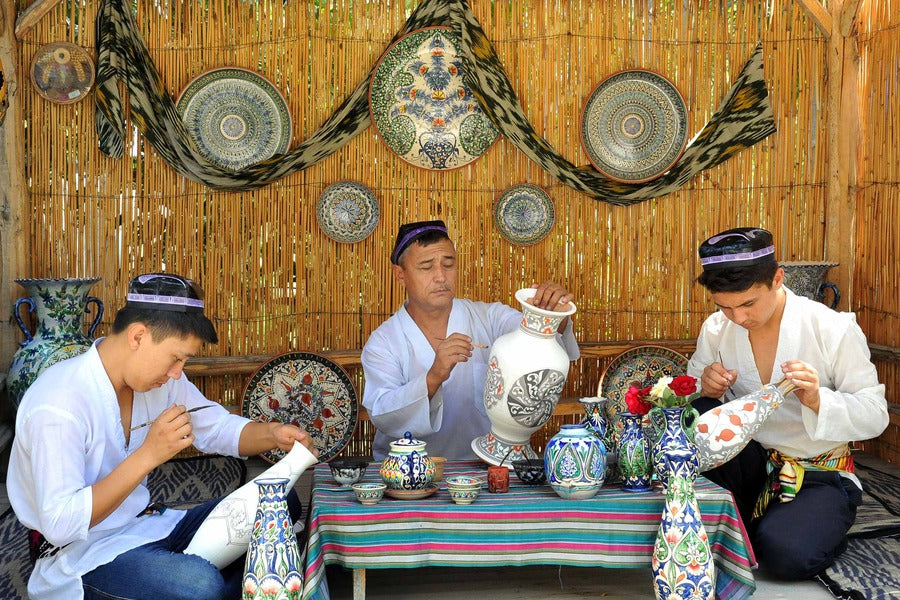
In Uzbek culture, how you welcome guests reveals who you are. The food you serve matters—but how you present it matters just as much. This is the tradition Usta Dilshodjon honors through his work.

Working in Namangan, eastern Uzbekistan, Dilshodjon specializes in multi-compartment serving dishes—pieces that are both technically demanding and artistically stunning. These aren't just serving dishes; they're cultural statements. In Uzbekistan, sharing food is sacred. When guests arrive, you present them with a dastarkhan that demonstrates care, abundance, and respect.

What collectors discover: these pieces are too beautiful to use only for serving. Many mount them on walls, display them year-round, let them bloom in their spaces permanently. This is functional art in its truest form—beautiful enough to display, functional enough to use.

When you share food from a beautiful vessel, you share more than a meal. You share respect. Every piece I make is an invitation. It says: you are welcome here. Sit. Eat. Stay.

— Usta Dilshodjon

Multi-Compartment Engineering

The multi-compartment serving dish is one of the most technically demanding forms in Uzbek ceramics. Each section must be hand-thrown separately on the wheel, then joined with precision. Weight distribution is critical—pieces must not tip when filled. The joins must be invisible yet strong enough to survive thermal stress.

The drying stage is the most dangerous. Different sections dry at different rates, causing many pieces to crack. Dilshodjon must rotate and monitor each piece constantly over 5-7 days. Uneven drying is fatal.

The failure rate is 30-40%. One crack, one weak join, one miscalculation in the kiln—and days of work are lost. This is why Dilshodjon produces limited quantities, and why each piece that survives represents a small triumph of skill over material.

Each compartment becomes its own canvas, but must also work as part of a unified composition. Color must balance across the entire piece. Patterns must flow from section to section. Total production time: 7-14 days from start to finish.